A Golden Guide to Scientifically Cultivating Your Baby's Independent Feeding Skills
Babies running around the house, parents chasing after them with bowls; an hour-long feeding, with even more food on the floor than in the bowl... Does this scene overwhelm you?
In fact, independent feeding isn't just about building a habit; it's also a crucial milestone in your baby's brain and muscle development. Seize this golden window and use the right methods, and you too can have a baby who "eats elegantly"!
Seize the "golden window" for independent feeding and achieve twice the result with half the effort
- Budduring (8-10 months): Babies begin grabbing spoons and smearing food all over their faces—this isn't mischief! It's a sign of hand-eye coordination and a desire to explore. Allowing them to feed during this time is the best way to start feeding.
- Golden Induction (12-18 months): Fine motor skills develop rapidly. Babies can try to scoop food with a spoon (even if they spill 80%), and their sense of independence emerges, refusing to be fed. Miss this opportunity, and the risk of needing to be fed again at age 3 increases!
- Consolidation (2-3 years): Babies become adept with spoons and forks, but are easily distracted. Establish rules, such as a 20-25 minute mealtime limit, to avoid playing while eating.
Key Signals: Baby reaches for the spoon, imitates chewing movements, and explores the food with kneading—start training now!
1. Parents can easily unlock independent eating skills by doing this:
Step-by-step teaching method: From grasping to using a spoon
- Finger foods: Soft banana strips, steamed carrot cubes, and other grip-friendly foods to develop hand-mouth coordination.
- "Two-spoon strategy": Give baby one spoon to practice scooping, while parents assist with the other spoon to reduce frustration.
- Pre-loading technique: Initially place food on the baby's spoon and guide it into the mouth, gradually transitioning to independent scooping.
2. Environment and tools make independent eating more effective.
Create a "distraction-free" dining area: Remove toys, turn off the TV, and eat together as a family. Babies learn by watching and imitating.
Magical tools:
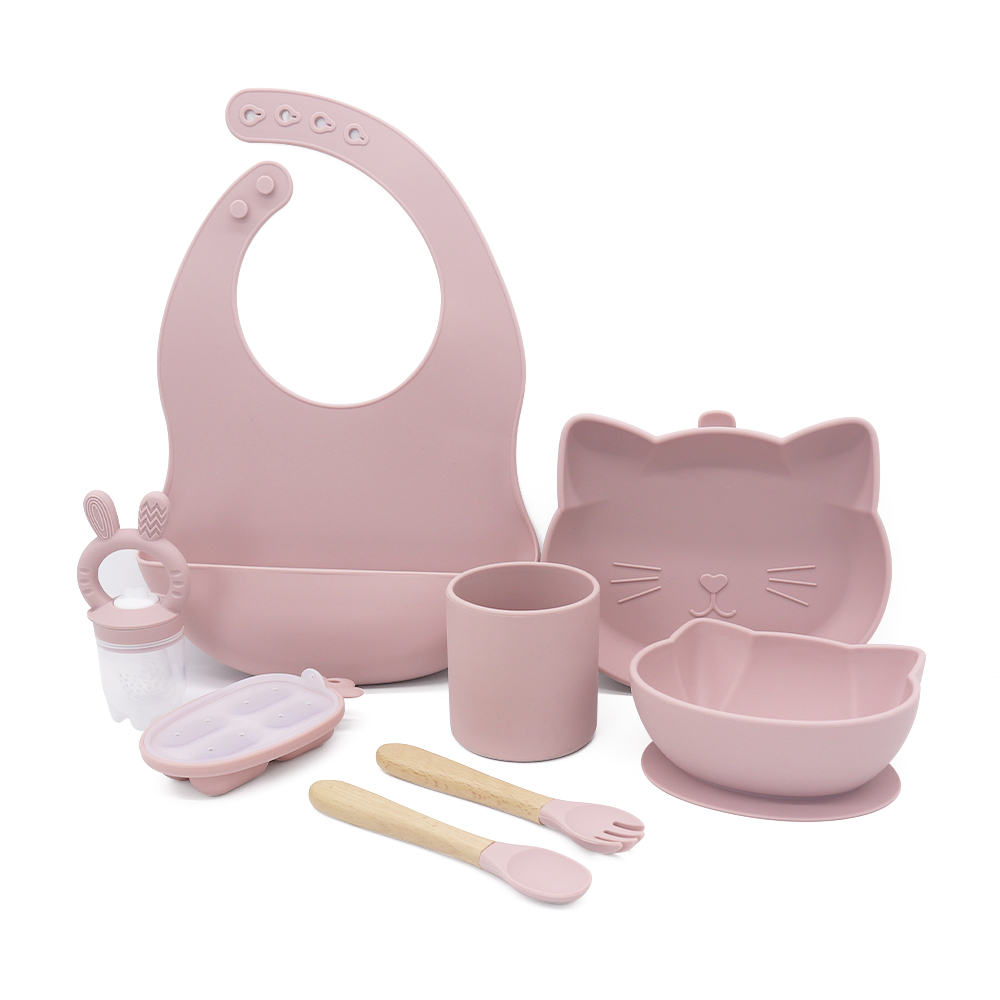
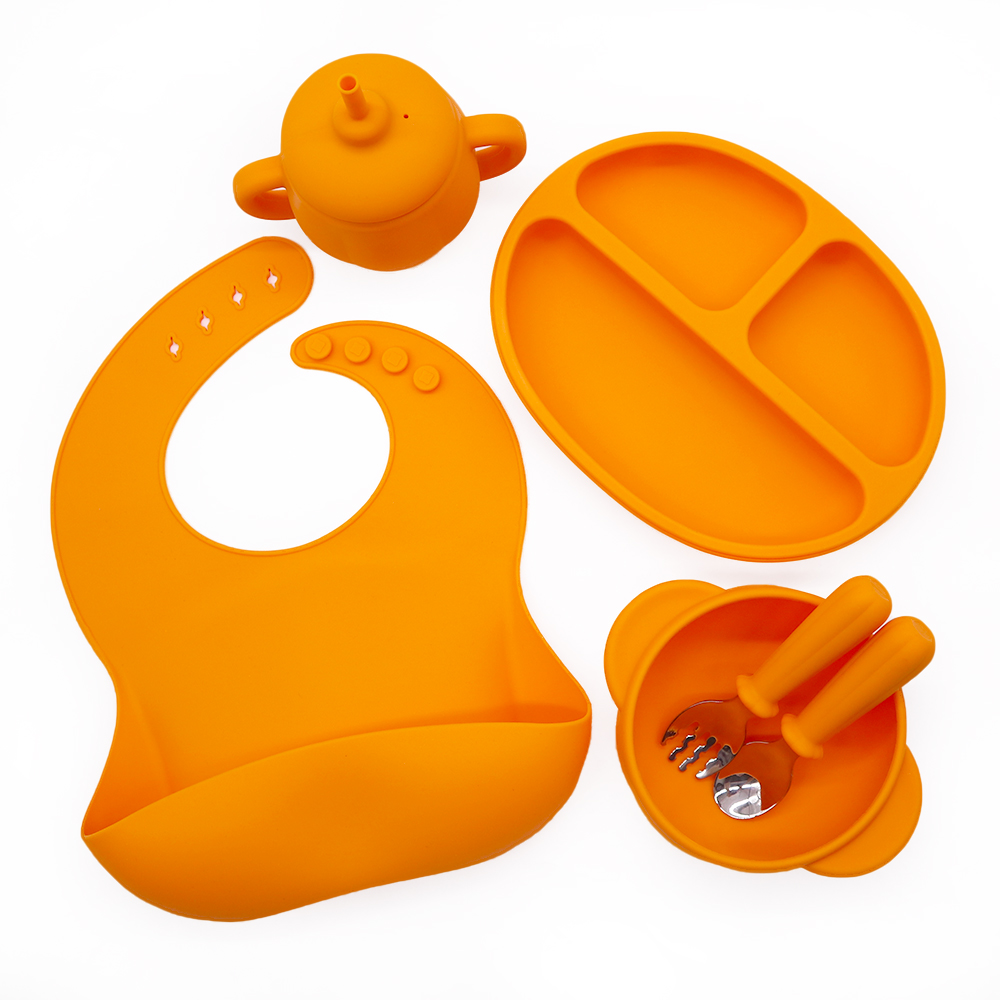
- Suction bowl + short-handled spoon: Anti-tip, perfect for small hands
- Silicone bib: Choose one with a deep, upright pocket and soft edges (like Melikey) to catch dropped food and avoid rubbing the neck
3. Attitude determines success: Embrace messiness and slowness.
- Dirt is inevitable! Playing with rice and pinching vegetables are ways for babies to explore the characteristics of food; forcing them to stop will stifle their interest.
- "20-Minute Rule": Set meal times and collect them at set times to avoid back-and-forth (use an hourglass as a visual reminder).
- No Labeling: Avoid saying "he hates vegetables" to avoid psychologically spurring picky eating.
Pitfalls: These practices are hindering your baby's independence!
- Chasing and coaxing: Teaches your child the wrong way, misleading them into thinking "eating is their responsibility."
- Collecting food early because of fear of messiness: Deprives them of practice.
- Forced feeding: Creates a fear of eating, leading to aversion.
- Chopping for others: For example, chopping food can hinder oral muscle development.
- Safety First: Avoid foods that pose a choking hazard, such as whole grapes and nuts. Monitor your baby throughout the process and help them learn to distinguish between normal retching (a self-protective mechanism) and choking.
Long-Term Benefits: The "Hidden Easter Egg" of Independent Eating
Letting your baby eat on their own offers far more than just a safe meal—
- Hand-Brain Coordination: Grasping and scooping stimulate fine motor development;
- Cognitive Development: Sense the texture and temperature of food, promoting sensory development;
- Independence and Confidence: The sense of accomplishment of "I can do it" lays the foundation for character!
Conclusion
The wisdom of parenting lies in the balance between letting go and watching over. When your baby shakily puts their first spoonful of food into their mouth, their lips stained with rice grains but a smile on their face, you'll understand: the mess you see before them will eventually become the foundation for their growth.
Einstein said, "Education is not about indoctrination, but about kindling a fire." Let eating return to its instincts and ignite your child's sense of control over their lives—start by letting them eat on their own.

 CONTACT
  Most Read